


Triggers define the conditions that set a workflow in motion. Depending on your setup, these can activate either immediately or after a visitor conversation has ended. The right trigger ensures your workflow runs at precisely the right moment to automate processes effectively.
After you’ve set up your workflow trigger, ensure that your workflow includes the right actions and branching logic to work effectively!
Conversation-based triggers
These triggers fire based on a visitor’s conversation via the Qualified messenger. Admins can customize whether these triggers happen immediately or at the end of the conversation.
A conversation is defined as both parties (the visitor and a rep, bot, or AI SDR agent) having sent at least one message in the chat window. A conversation ends when the visitor ends their session.
Conversation with a rep
- Immediately: Fires when a visitor exchanges messages with a live rep.
- After conversation ends: Fires once the session concludes if the visitor engaged with a live rep.
Conversation with a bot
- Immediately: Fires when a visitor interacts with a rules-based chatbot or an AI SDR.
- After conversation ends: Fires if the visitor only interacted with a bot during the session.
Conversation with a rep or bot
- Immediately: Fires as soon as the visitor interacts with any rep, bot, or AI SDR.
- After conversation ends: Fires once the session ends, provided the visitor engaged with any rep, bot, or AI SDR.
Conversation with an AI SDR
- Immediately: Fires when the visitor exchanges messages with an AI SDR.
- After conversation ends: Fires if the visitor only interacted with an AI SDR.
Note that a conversation with an AI SDR agent will also fire the “Conversation with a Bot” and “Conversation with a rep or bot” workflow triggers. Use the AI SDR-specific trigger only when your workflow is specific to your agent.
Pounce triggers
Pouncing is Qualified’s term for when a human rep or an AI SDR agent initiates conversation with a website visitor, rather than waiting for the visitor to engage. Because these are always one-time events, pounce triggers always fire immediately, as soon as the criteria are met.
Pounce sent
Fires immediately when a pounce is sent.
Pounce reply
Fires immediately when the visitor responds to a pounce.
Auto-pounce sent
Fires immediately when an automatic pounce is sent on behalf of a rep.
Auto-pounce sent
Fires immediately when the visitor replies to an automatic pounce on behalf of a rep.
Chat request triggers
Like pounce triggers, chat request triggers do not allow the admin to select the timing criteria. Request triggers will always trigger immediately, and missed chat request triggers can only trigger at the end of a visitor’s session.
Inbound chat request
Fires immediately when a visitor requests a chat with a live rep.
Inbound chat request from AI SDR
Fires immediately when an AI SDR agent routes a conversation to a live rep.
Inbound chat request missed
Fires after the session ends if an inbound request was not answered, regardless of how the inbound chat request was sent.
Lead capture trigger
The lead capture is unique in that its timing can depend on the visitor’s actions - but typically, as long as a visitor provides an email address, this workflow will trigger at some point during their interaction with Qualified. Typically, you’ll want to pair the “Create Lead” workflow action with this trigger.
Lead captured
- Fires immediately when an email is collected and any of the following occurs:
- A meeting is booked.
- A conversation with a rep captures all required fields.
- The Experience ends.
- The session ends.
While you may have required fields in your CRM or Marketing Automation platform, typically the Lead Capture workflow will trigger as soon as an email is captured. Consider using branching logic in your lead capture workflow to ensure that you are only passing valid leads into your system!
Calendar triggers
As meeting triggers are also time-bound events, meeting triggers will always have preset timings. These triggers are not mutually exclusive; if workflows are defined for both meeting offered and meeting booked, and a visitor is offered a meeting and then books it, both workflows will fire.
Meeting offered
Fires immediately when a meeting is offered.
Meeting booked
Fires immediately when a visitor books a meeting.
Meeting offered but not booked
Fires after the session ends if a meeting was offered but not booked.
Email campaigns triggers
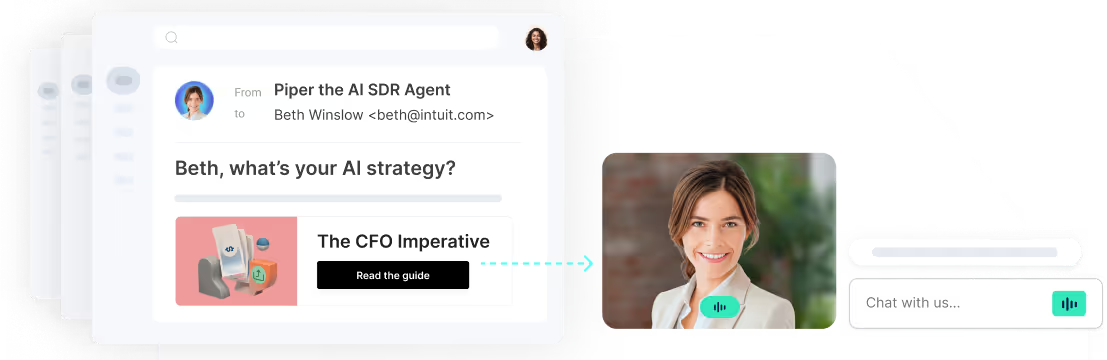
Email campaigns triggers are not necessarily tied to a visitor session and trigger based on AI SDR Agent activity via email. As such, all email campaign triggers fire immediately.
Note that both the Email sent and Campaign exited triggers have further configuration required based on the type of lead activity that triggers the workflow.
Lead started campaign
Fires immediately when a lead is added to an email campaign and the first email has sent.
Email sent
Fires immediately every time an email matching the criteria is sent. To set up this workflow, choose which of the following kinds of emails should trigger the workflow:
- First touch: The first email sent to a lead in an email campaign
- Nudge: An email sent in the middle of a campaign, as defined by the persistence setting of the campaign
- Breakup: The final email sent before a lead is removed from a campaign due to timeout
Use the filters is any of or is none of to select only certain kinds of emails to trigger this workflow. If you want the workflow to trigger no matter what kind of email is sent, use the is anything filter setting.
Lead replied
Fires immediately when a lead replies to an email from a campaign.
Lead exited campaign
Fires immediately whenever a lead exits an email campaign. There are several reasons a lead might be exited from an email campaign:
- Engagement window ended: The lead has been active in the campaign for the defined engagement window (2 weeks by default) without meeting any other campaign exit criteria.
- Campaign turned off or expired: The campaign is no longer active, either because its end date has arrived or it was manually ended.
- Custom exit criteria met: The lead met the custom-defined exit criteria set up as part of the email campaign. Typically this is tied to a Salesforce field update.
- Email bounced: When an email is marked undeliverable, the lead is removed from the campaign.
- Invalid sender: The rep or AI SDR email address used to send an email to the lead is no longer valid or needs to be reauthenticated.
- Joined other campaign: The lead has joined another, higher-priority email campaign. To reduce email frequency and spamming, leads are only able to be active in one campaign at a time.
- Manually removed: The lead was removed from the campaign by a Qualified admin.
- Meeting booked: The lead booked a meeting with a rep.
- Unsubscribed: The lead removed themselves from the campaign using the link in the unsubscribe footer.
Use the filters is any of or is none of to select only certain kinds of campaign exits to trigger this workflow. If you want the workflow to trigger whenever a lead exits a campaign for any reason, use the is anything filter setting.


.svg)


